

Shakti Vahini runs a Trafficking in Persons Response Centre in Delhi and Kolkata. The TIP Response Centre collect cases from various Shakti Vahini district offices located in West Bengal, Assam, Jharkhand, Haryana, with its intervention centres at New Delhi and Kolkata being the Nodal Offices for intervention in Human Trafficking cases.
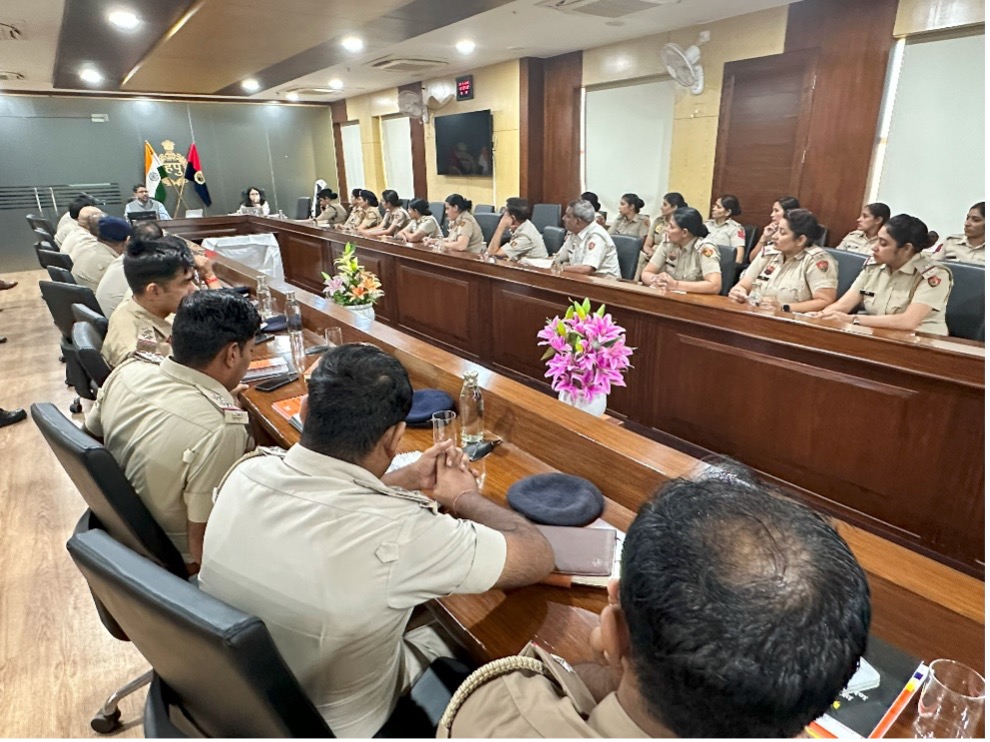

The TIP Response Centre is the hub of search operations of trafficked victims, missing children and women and carry out monitoring of railway station and trains to locate the traffickers. The intervention centre has accessibility of professional counsellors, social workers and outreach workers to monitor the cases of trafficking.
The TIP Response Centre work actively with the Anti-Human Trafficking Units and the law enforcement officials from across the country to monitor the cases of trafficking. They participate in rescue operations and is working towards breaking the organised crime network prevalent in the country. The TIP Response Centre works effectively towards ensuring inter-state coordination between the police department by linking the Anti-Human Trafficking Units in the destination area and source area for search operation of trafficked victims.
Additional functions of the TIP Response Centre includes-
- Take up the crusade against all Criminal aspects of the crime of human trafficking particularly in women and children by creating an institutional mechanism and working across all the stakeholders i.e. police, prosecution, civil society etc.
- Post rescue care and attention of the rescued persons, with a view to empower them and also to prevent re-trafficking.
- Sensitizing, Capacity building and training of police & prosecution personnel, especially at the grass root level to improve law enforcement response to the organized crime of human trafficking.
- Sharing of information across stakeholders, states and organizations for effective implementation of Anti-Human trafficking measures relating to its criminal aspect and promoting best practice in this area.
- Enhancing cooperation between law enforcement agencies, concerned government departments to assist trafficked victims.
- Conducting raids and rescue the victims in collaboration with AHTU and local police.
- Provide support and care to the victims as per the SOPs devised by the Anti Trafficking Cell, Ministry of Home Affairs in collaboration with UNODC.
- The intervention centres will provide legal services to the victim and assist the public prosecutor on behalf of the victims.
- Prevention through proper rehabilitation and reintegration to prevent re-trafficking in partnership with state and non-state stakeholders.
- Prevention through coordination and cooperation with other agencies, including NGOs.
- Keeping vigil at locations prone to trafficking and monitoring the movements of strangers in the villages.


REFERRAL DUTIES OF THE TIP RESPONSE CENTRE
Referral to a counsellor: Rescued trafficked persons will be referred to an appropriate shelter home and protection homes for holistic counselling, especially for relief and rehabilitation.
Referral and Production: All victims of trafficking who are below 18 years need to be produced before the Child Welfare Committee. If adult, the victims have to be produced before the magistrate for further court orders.
Referral for health care: When the victim needs immediate medical attention, it should be attended to on priority. The intervention centre shall arrange for immediate medical care in collaboration with medical authorities.
Referral for psychosocial intervention: The rescued person is often extremely traumatized and needs to be handled sensitively and in a humane manner. The Intervention Centre must make all efforts to facilitate psychosocial help and intervention.
Referral for legal representation: Though the state is duty bound to take up the legal representation of the victim, private lawyers are often required to intervene. Intervention Centre officials should promote such legal representation. The District Legal Services Authority are partner to provide legal aid to victims.
Referral for compensation: Men, women and children who are rescued from situations of forced labour require immediate sustenance for their survival. The mandatory compensation under the government schemes should be obtained for the rescued persons.
Referral for rehabilitation: A victim who is not properly rehabilitated can, and more often is, re-trafficked. Preventing re-trafficking is a Intervention Centre mandate. Refer the victim to the government/ NGO run Homes; link up with appropriate rehabilitative agencies, including corporate and other bodies who could provide support.
IMPACT OF THE TIP RESPONSE CENTRE ON THE TARGET GROUPS
- Better Coordination between law enforcement agencies lead to increased vigilance and action against traffickers.
- Proper management of the case and careful evidence collection, counselling of victims and following all process of laws lead to institution of strong cases.
- Victims of trafficking get a quick response so that traffickers may be caught at the source areas.
- Target groups will have access to rescue in any part of the country without losing time if proper networking between law enforcement agencies are maintained.
- Tracing of missing children and women can be done in interstate collaborations.


